
Water: The Overlooked Prescription for Healthcare Professionals
October 19, 2025
Psychological Factors in Obsessive Relationships: Clinical Considerations for Healthcare Professionals
April 7, 2026Introduction
Healthcare professionals need to understand the psychological processes of obsession and emotional attachment and interpersonal dynamics because they work in mental health and behavioral medicine and therapeutic practice. Emotional connections and obsessive attraction patterns show up in multiple medical scenarios which affect how patients behave and follow treatment plans and their relationships with others.
We are going to analyze psychological obsession mechanisms through relationship-based examples which demonstrate how emotional connections and vulnerability and behavioral reinforcement operate together. We will also examine how habit formation and behavioral change methods from modern psychology help mental health improvement and clinical practice transformation.
Psychological Obsession and Emotional Attachment
Mechanisms of Emotional Bonding
The main factor which leads to obsessional attachment does not stem from physical attractiveness or intelligence or other outside characteristics. The research shows that the emotional experience people have during interactions serves as a key factor for strengthening these bonds.
People tend to form deep emotional bonds when they experience feelings of safety and trust and vulnerability and acceptance with another person.
People who usually stay distant or protective in their social connections often show up in clinical settings. People who show emotional vulnerability to others receive a strong psychological reward when they develop authentic emotional relationships.
The degree of openness in a relationship produces stronger bonds between partners which might lead to obsessive conduct.
People develop emotional bonds through repeated connections with those who generate secure emotional spaces because of their intrinsic psychological requirements.
Role of Vulnerability and Emotional Safety
Deep interpersonal connections require vulnerability yet this presents difficulties to people who tend to avoid emotions or protect themselves. In therapeutic settings, controlled vulnerability teaching methods help patients develop emotional trust which leads to better therapeutic relationships and successful treatment results.
People continue to exhibit these behaviors because they received positive reinforcement through the perception of emotional security which allowed them to be authentic themselves.
In clinical practice patients demonstrate a need for communication which stands apart from their desire to talk to people who enable them to experience emotions they typically hold back. The distinction between these two methods shows why it is essential to understand how reinforcement systems operate and how emotional connections impact patient actions.
How Gender Roles and Behavioral Reinforcement Affect People
Behavioral reinforcement by letting someone take on a specific psychological role like traditional masculinity leads to stronger feelings of value and connection. The ability to express gendered roles creates a psychological benefit which motivates people to participate repeatedly in these activities. The study focused on masculinity reinforcement yet the same principles extend to various relationship types which should be examined when assessing attachment patterns in clinical settings.
Practitioners can customize their interventions and handle fundamental psychosocial stressors through their knowledge of these complex dynamics which supports healthy relationship formation in affected individuals.
The Process of Habit Creation and Behavioral Transformation in Mental Health
Importance of Habit Formation
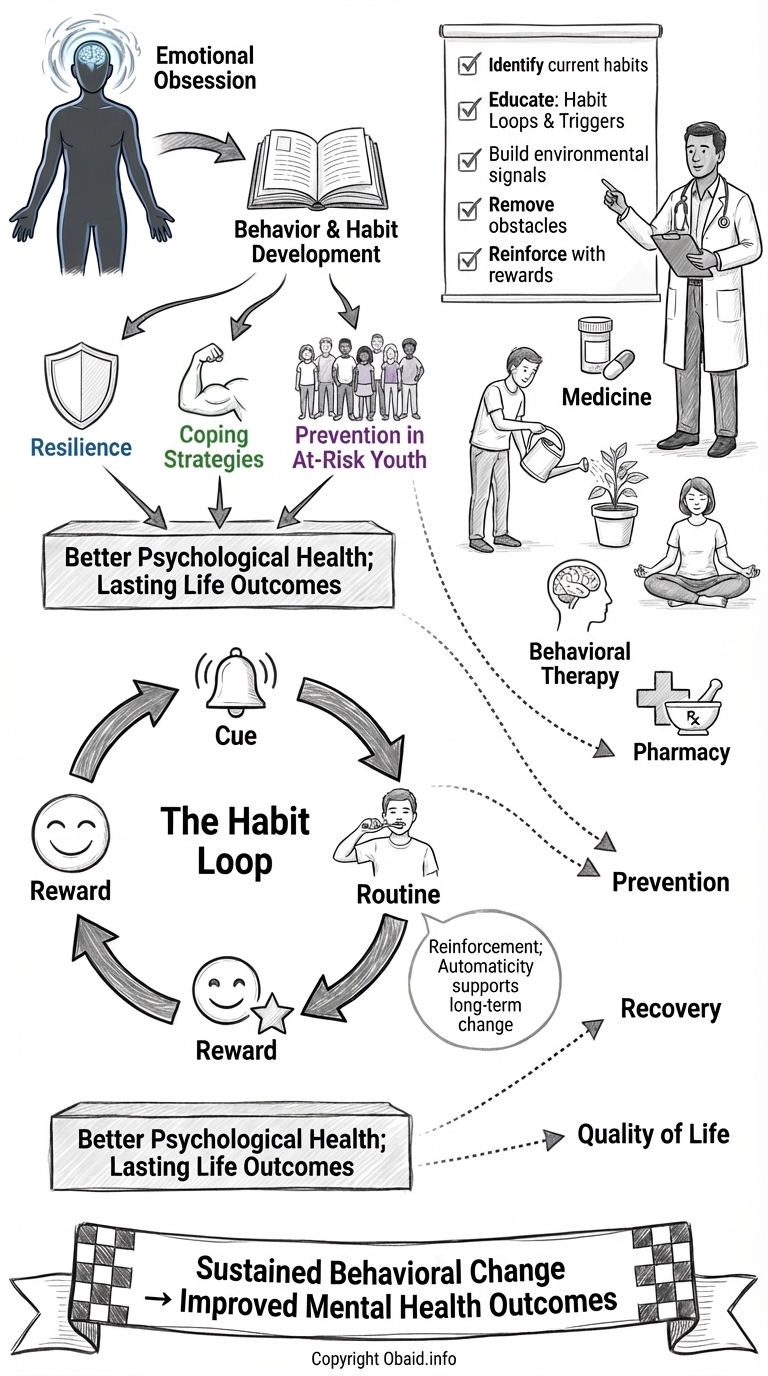
People should study how behavior and habit development influences mental health after they understand emotional obsession exists as a personal experience. Research shows that focusing on habit development leads to better psychological health and produces lasting effects on life outcomes. The most common habitual behavior models appear in popular literature yet clinical practice bases its work on behavioral psychology.
Research indicates that habit formation underpins long-term behavioral change, supporting recovery and maintenance in conditions such as anxiety, depression, and addiction. Early adoption of positive habits confers advantages in developing resilience and coping strategies, highlighting the potential for preventive interventions in young adults and those at risk.
Clinical Application: Promoting Habit Change
Healthcare professionals need to focus on current patient habits and evidence-based habit change interventions for behavioral medicine and psychology and pharmacy. The approach requires building environmental signals while eliminating obstacles to change and using reinforcement methods and educating patients about habit loops and behavioral triggers.
Medical professionals need to guide patients toward developing small habits which will build their ability to sustain changes and their belief in their own capabilities. Treatment plans that include habit formation strategies lead to improved results and better life quality for patients who need ongoing care or face major life changes.
Emotional Dynamics and Clinical Care
Relevance for Professional Practice
Effective clinical care depends on understanding how emotional experiences connect with interpersonal relationships and behavioral routines. The way people connect emotionally through relationships together with the benefits of opening up and the systems that reinforce behavior patterns determine both individual bonds and patient-provider relationships as well as treatment compliance and therapy success.
Medical professionals need to recognize emotional dependency indicators while providing care with trauma-informed and patient-centered methods for patients free from obsession. The promotion of healthy interaction patterns together with the support of adaptive habit formation leads to better patient outcomes and reduces the occurrence of maladaptive attachment behaviors.
Considerations for Multidisciplinary Teams
Medical and pharmacy and psychology and allied health professionals need to work together to apply these findings in their professional settings. The shared knowledge about emotional connections and behavioral triggers and habit formation benefits interdisciplinary care and results in better patient outcomes across all care levels.
Conclusion
Emotional obsession together with attachment form intricate psychological patterns which stem from personal experiences and learned behaviors and environmental signals. Healthcare professionals from different fields need to grasp these mechanisms because they help them treat mental health problems and build therapeutic connections and develop successful habit formation methods. The implementation of these concepts in clinical settings enables patient-centered care and professional development which helps practitioners meet the changing requirements of mental health and behavioral medicine.
Key Takeaways:
- People form emotional bonds based on their personal experiences of feeling secure and open to emotions instead of relying on outside features.
- Therapists need to support emotional openness between themselves and their clients to create stronger bonds which produce better results.
- Assessment and intervention methods must evaluate attachment patterns through the influence of gender roles and behavioral reinforcement mechanisms.
- Behavioral change depends on habit formation as a foundation which helps develop positive habits that enhance mental health and build resilience.
- Multidisciplinary approaches enhance care for patients with obsessional attachments and facilitate best practice in mental health treatment.
The educational information provided here needs to be used strictly for learning purposes and should not replace professional medical guidance or diagnostic services or therapeutic interventions. For specific concerns, please consult a licensed healthcare provider.